Wednesday, April 19, 2023

Rape Culture

    Rape Culture

Trigger Warnings: The following content contains descriptions of sexual assault, sexual abuse, violence, and its relations to rape culture. 


       What is rape culture?
  • "Rape Culture is an environment in which rape is prevalent and in which sexual violence against women is normalized and excused in the media and popular culture.  Rape culture is perpetuated through the use of misogynistic language, the objectification of women’s bodies, and the glamorization of sexual violence, thereby creating a society that disregards women’s rights and safety", (Marshall University, 2023). 


        Examples of what is part of rape culture
  • Making jokes such as "no means yes, yes means anal".
  • Minimizing the trauma the victim endured by making statements such as "boys will be boys".
  • Victim blaming or "slut-shaming" the victims by stating "They were asking for it, they shouldn't have worn such revealing clothes, it's their fault for getting drunk at a frat party".
  • Objectifying people's bodies.
  • Controlling what a person should wear.
  • Not educating kids about sexual education where they can learn also learn consent.
  • Placing the responsibility on the women to prevent the assault from happening.
  • Violating people's privacy examples including sharing intimate media. There have been cases of an individual sharing an intimate photo with their partner, which then gets shared with others without their knowledge. In other cases, the couple will break up and the ex-boyfriend/ex-partner will then share intimate media that was shared in the relationship to the public. This is not only illegal but infamously known as revenge porn.
  • Teaching the victim that it's their fault instead of the rapist's.

        Why is rape culture an issue?

  • Rape culture is not only a heavy topic to discuss but it is a relevant topic that has been around for generations. There are attitudes and actions that display the common traits of this culture such as slut-shaming, victim-blaming, sexual harassment, objectifying bodies, misogyny, and more. These traits have been becoming more common in our everyday lives which is only causing more harm for individuals who have been affected by this and others who are at risk of experiencing sexual assault. Not acknowledging this violent culture will only support the perpetrators who commit it.

        Facts
  • According to the National Sexual Assault Hotline, sexual assault happens every 68 seconds leaving 1 in 6 women experiencing an attempted or complete assault. 
  • Young women age groups ranging from 16 to 19 years old are 4 times more likely of being at risk of being victims of attempted or completed sexual assault.
  • Women in age groups ranging from 18 to 24 years old are 3 times more likely of being at risk of sexual violence. 
  • In men groups, there has been 1 in 33, who've experienced a completed or an attempted assault in their life. 
  • Transgender college students are at a high risk of sexual violence with 21% of transgender, non-conforming, genderqueer individuals experiencing assault.
  • This knowledge shouldn't provoke fear in people, but instead, provoke change. There should never be a normalization for violence, especially sexual violence.

Personal
This social issue directly affects me because I experienced rape culture growing up and continue to experience it as an adult. There have been situations where I have been sexually harassed and in events where it's made me fearful of being outside. I have experienced sexual assault and become angry knowing that it can happen again if I'm at the wrong place at the wrong time. I would like for there to be a change in our society so that the responsibility of not being assaulted or endangered is no longer placed on us (women, men, non-binary people) and rather have those who commit these violent acts be held accountable for their crimes. I'm advocating for change and would like for there to be a sense of freedom for all individuals without worrying if they're going to be targeted. 

I chose this issue because I wanted to bring light onto this issue and hopefully give others a perspective of what it is like to go through this. I would like anyone who has gone through sexual harassment, assault, or similar to know that they're not alone. I find it important for people to start protesting against others who engage in this culture by calling them out and continuing to stand up against it. Ultimately, I would like my project to give courage to those who are against this to unite so that we can demand change for a better future for ourselves, our families, and our children. 

The Community
I interviewed three individuals who wanted to be part of the project by asking them a series of questions:
  • How would you define rape culture?
  • As a child, were you ever warned of certain situations or taught to protect yourself from strangers?
  • Can you recall the first time you experienced sexual harassment?
  • How often do you find yourself in an uncomfortable or vulnerable situation where protection will be needed?
  • What are your thoughts regarding toxic role models with big platforms such as Andrew Tate, spreading misinformation, promoting hate speech, and influencing their audience to follow their ideology?

Garrison S., 25 years old


 Rape culture is a society that helps support and/or encourage sexual assault, abuse, and harassment. My family has always taught me how to protect myself at all costs, even if it’s with someone I am dearly close with. I believe the reason they have taught me that is that they have close friends that have encountered sexual abuse. I have never experienced sexual harassment, but I have had friends who’d come up to me and tell me that they have been sexually harassed. I do feel uncomfortable somewhat often outside, by just reading the individual’s body posture and the way they act around me and others. Mr. Tate’s information has given men the idea that “women are no good”, “be the best man out there because most men are weak”, etc. To me personally, that is not the right way to bring out “the man” inside. His choice of words towards women is very untrue and his way of talking to men about “masculinity” and that “men should never show their emotions towards others because it makes you weak” is a very bad example of what it is to be a man. That is why most men are afraid to express and show their emotions to others because they don’t want to be seen as “weak”, and I do believe that is why the men's suicide rate increases.

Ruby H., 21 years old


Rape culture is when people normalize sexual violence against men and women. Yes, I was. My mom did not allow me to sleep over at people's houses and always told me about “stranger danger” she made me memorize her number when I was 4. My mom was more intense in teaching me and protecting me from certain situations. A form of sexual harassment I experienced was being in situations where I’m uncomfortable around creepy men. For example, being hit on at the club by men and they don’t get the hint and keep doing it.  I feel vulnerable every day when I go out in public alone. You never know who would be watching you when out at the grocery store. Even going to the gas station alone I’m always looking out and staying on my toes. I have heard countless stories of women getting kidnapped in broad daylight at a parking lot of a grocery store or while pumping gas. It makes me upset to see misogynistic men like Andrew Tate disregarding women in everything. People are so easily influenced by the stuff they see on social media and will follow and believe the wrong things.

Tammer M., 24 years old


Rape culture is when a group of individuals look at acts of sexual assault and think it’s entertaining or that those that experience it deserve it. My mom taught me to be aware of my surroundings when I was a child, she showed me a website of registered sex offenders that were around us and got me a flip phone in middle school so I can call her when I got home every day. I think she taught me this so I can be aware of the world around me and not just trust strangers. It wasn’t the first time but I do recall one day after watching a football game when I was in high school me and my cousins were getting into a car in the parking lot and this couple that was older than us walked behind me and the girl grabbed my butt and just kept walking and it made me feel extremely uncomfortable but I didn’t say anything we just got in the car and left. Not often, I used to run at night and I would get creeped out here and there so I have since stopped but for the most part, when I see a lot of people in public I feel more comfortable. I never understood how people like that can gather such a following, it helps pedal along toxic masculinity and keeps things like rape culture going. People need better role models and need to stop idolizing celebrities.


References
Fisher,B.Victims of sexual violence: Statistics. RAINN. https://www.rainn.org/statistics/victims-sexual-violence
Marshall University, Rape Culture. Women's Gender Center. https://www.marshall.edu/wcenter/sexual-assault/rape-culture/ 
Kalra G, Bhugra D. Sexual violence against women: Understanding cross-cultural intersections. Inidan J. Psychiatry. 2013 July 55 (3) doi: 10.4103/0019-5545.117139.


Civc Engagement Project - Disability in the community


Disabled people should live in the community and feel as part of their world. The communities should not discriminate against disabled people. Communities have to respect laws and disabled people, only then will they feel like part of their community.  The community should welcome guest speakers to introduce themselves to the audience to hear about their disability experience. The community should hear about their experiences at work, and of places where people have treated them differently; positively and negatively. Students with disabilities are able to complete their education. People with disabilities deserve to live normal lives in the community. A disability is not an excuse because people with disabilities want to blend in with nondisabled people. They need the freedom to get to know others and to live within the community.

                                                                                                                                                            People with disabilities have talents and hobbies that they can share with the community. We all have the right to live a normal life and have plans. Disabled people have many opportunities to have a job. A job gives them a chance to be independent and to be in a community where they can interact with others.


Social Media and Mental Health by Fernanda Magdaleno


Social media, undoubtedly, has become a significant part of our life. The reason relies on the human's social nature. Humans are social beings who enjoy connecting with others, ultimately impacting our mental health. Being socially involved can help reduce stress and depression, steam self-worth, and bring joy and happiness, which is possible due to the liberation of serotonin by the brain. However, the lack of social interaction can adversely affect our mental health. 


In our contemporary society, the phenomenon of social media platforms such as Instagram, Snapshot, Twitter, and Facebook, among others, are becoming impactful in our communication systems. These platforms are gaining popularity because they allow us to connect with people worldwide and represent ourselves in a virtual world as we wish. However, it is essential to consider they will never surpass real-world interactions. 


Social media can bring benefits to their users. These benefits include sharing with people with the same interest as you, joining or promoting awareness of relevant social issues, and finding an outlet to express yourself. Social media could be a great source of information if used properly. Even though the positives exist, it is deniable that social media has a dark side as well. 

The excessive use of social platforms can harm a person's mental health. Since social media is a relatively new technology, there is little research about its consequences in the long term. However, much evidence shows a strong link between social platforms and the rise in depression, anxiety, self-harm, and suicidal thoughts. 

Indicators that social media may affect your mental health include spending more time online rather than with real friends, being distracted at school or work, comparing unfavorably with other people, having sleep problems, fear of missing out (FOMO), increased depression and anxiety, and engaging in risky activities to gain likes. 


Personal Statement 

I choose this issue because I have personally experienced the positive and the negative of social media. For one part, it has allowed me to contact my family, who are currently out of the country. It has also helped me to engage with groups that stand for causes I am interested in. On the contrary, when I use social media extensively, I develop insomnia, ultimately affecting other aspects of my life, especially my mental health. I have noticed that lacking sleep affects my mood negatively and my capacity to get things done, translating into anxiety. Even though my experience with such technologies is not as bad as others can experiment with or are currently going through, I can see how many people struggle with this issue. Therefore, it is fundamental to be aware of the consequences of extensive use of social platforms. 


What Can be Done?

Self-control and listening to your body are key. If, at some point, you feel overwhelmed by the use of social media, it is crucial to take a break. A 2018 University of Pennsylvania study found that reducing social media use to 30 minutes a day significantly reduced levels of anxiety, depression, loneliness, sleep problems, and FOMO. The same study also showed that being mindful of what we consume on such platforms can improve our mental health. Much content engages with things we like or would like to learn. Looking for content that relates to this is a wise decision. Even so, it is essential to mention that non of the above activities would replace professional help. Seeking professional help is always the best option when dealing with mental health issues, including the ones derived from the use of social media. 


Here are some resources to seek help:

https://www.helpguide.org/

https://namica.org/

https://www.calhope.org/


Community Response:


"Social media has affected the way I view my life because of all of the false advertisement of "perfect" lives."

Ashley G. 


"Social media has affected my mental health because it has changed the way I view myself. All the filters and apps used in such platforms had really changed beauty standards."

Navid C. 


"Social media has affected me personally because it spikes my anxiety by having to deal with a fear of missing out on stuff happening on the internet."

Imelda M. 


References:

Gordon, Sherri. “How Social Media Impacts Your Mental Health.” Verywell Mind, Verywell Mind, 4 Jan. 2021, https://www.verywellmind.com/link-between-social-media-and-mental-health-5089347.

“The Social Dilemma: Social Media and Your Mental Health.” Here's How Social Media Affects Your Mental Health | McLean Hospital, 18 Jan. 2023, https://www.mcleanhospital.org/essential/it-or-not-social-medias-affecting-your-mental-health.

Karim, Fazida, et al. “Social Media Use and Its Connection to Mental Health: A Systematic Review.” Cureus, U.S. National Library of Medicine, 15 June 2020, https://www.ncbi.nlm.nih.gov/pmc/articles/PMC7364393/.


Crime Rate

week 12

Increasing Crime Rate in El Sereno


History & Research

Plainly speaking, neightboorhoods with low income and minority residence commonly have higher crime rates. El Sereno is one of the oldest communities in LA and has stood similar since its beginings. Demographically speaking  it holds primarily Mexican residence with a low to medium income all around.

https://www.movoto.com/guide/los-angeles-ca/el-sereno-los-angeles-oldest-community-in-los-angeles/ 

Just from March 24 to April 11 alone, over 50 surface levels crimes were commited and recorded. These crimes include events such as theft, assaullt, robbery, vandalism, and burglary. 

https://spotcrime.com/CA/Los%20Angeles/El%20Sereno 

Tuesday, April 18, 2023

Gentrification in Los Angeles

Gentrification in Los Angeles

By: Ivan Leguizamo


What is gentrification and where is it happening?

Gentrification is an issue that plagues Los Angeles, whether it's noticeable to everyone or not. The term refers to the process of low income urban areas being forcibly changed when people who are financially better off move in at the cost of kicking out current inhabitants. This is an issue that occurs in many cities across the United States and surprisingly recently has been occurring in other countries as well. United States citizens moving to "underdeveloped countries" because of the cheaper cost of living is something relatively new, but not unheard of. But considering I live in Los Angeles, that's where I notice it the most. 

In a study conducted by the Urban Displacement Project, they looked at three Southern California counties to see if the multiple census tracts were going through gentrification. They studied Los Angeles, Orange, and San Diego Counties and created criteria to place the tracts in a "spectrum" of gentrification. The study found that Los Angeles had the highest rates of gentrification, "with 10% of tracts classified as At Risk of Gentrification, Early/Ongoing Gentrification, or Advanced Gentrification" (urbandisplacement.org). Gentrification can be noticed in different ways, in Los Angeles it can be a new restaurant that replaced a small local business, or new modern apartments that replaced low-income families' homes. 

But a very well known incident of gentrification that people often forget about is the construction of Dodger stadium. Although today the Dodgers are known to have a huge Latino fanbase, it wasn't always the case. In fact, the construction of the Dodger Stadium displaced many Mexican American families who lived in the community previously known as the Chavez Ravine. 


Before the construction of the stadium, the Los Angeles Council had wanted to remove inhabitants of the Chavez Ravine to modernize the city. Presumably, the inhabitants would be removed to construct newer housing developments. Inhabitants of this community were originally promised housing in the new projects but that did not apply to many of the inhabitants. Eventually when the housing plans fell through and the Dodger Stadium was officially meant to be built, the city forcibly removed the inhabitants, no longer with the promise of new housing for them. The most famous of those families being the Arechiga family, who were "literally dragged [out]...[because they] refused to vacate to make way for the stadium, out of their home as bulldozers stood by read to carry out demolition orders" (Dinces 4). 

What is being done to help?

It's hard for individuals to put a stop to gentrification themselves, but voting for officials that take the community's wants and needs into consideration is important. There are organizations that also take gentrification seriously and work to prevent low-income families from being displaced. East LA Community Corporation is one such organization that fights and advocatess for economic and social justice in the Boyle Heights and East LA area. They own multiple properties that contain apartments that prioritize low-income families as well as provide different services such as financial counseling, first time home buyer workshops, and rental counseling. Although the building of these apartments is considered gentrification in a way, part of their mission works to prevent the displacement of low-income families. Some of these apartments are built in areas that were previously lots or businesses instead of houses.

Why does this matter to me?

I've lived in Los Angeles my whole life, both in Boyle Heights and in East LA and I've seen gentrification happen right in front of me, sometimes not even realizing it. There's just this sort of feeling or aura that I notice when walking through1st Street or Cesar Chavez or Whittier Blvd that felt like home. Sure the buildings looked old but it felt right, like I was surrounded by my own people. Next thing you know there are modern-looking apartments, a Nike store, and a food chain replacing a local business that just seems out of place. It stands out, interrupts the rest of the street. To be fair, the apartments that have been built around Boyle Heights and East LA do prioritize low-income families so they're okay. But housing prices and rent keeps going up.

I remember realizing that I started noticing more homeless people in the East side. And I learned that Los Angeles was pushing them out of Downtown and so they ended up over here because they were modernizing Downtown. The homeless crisis is a different problem entirely but it's somewhat connected with gentrification. I remember when I learned about the 710 freeway and how they stopped it from cutting through Pasadena. And then I thought about all the freeways that cut through Boyle Heights and East LA and I didn't think that was fair. Why was it only okay for these low-income neighborhoods and families to be displaced by city projects?


Talking with my community

Bonifacio L. (Conversation and response was in Spanish)
I didn't know what the term gentrification was but I have noticed it. When big businesses replace smaller business it doesn't fit in. It's not part of the community or culture. I've noticed all the apartments that have been built around Boyle Heights and East LA and although they do claim to prioritize low-income families they aren't all. Some people know how to play the system and take advantage. Or when schools buy houses to expand. Gentrification is definitely a problem.

Maria L. (Conversation and response was in Spanish)
So the apartments that have been popping out all over Boyle Heights and East LA are part of gentrification? I imagine they pay for the houses they're replacing no? Well, if they don't I guess they force them. I'm a very distracted person but I've definitely noticed those apartments they've built and they keep building more. Like those apartments that they burned down on 1st street while they were building them. If they take people out of their homes to build these apartments I don't think its good, especially on the extremes like with Dodger stadium. I can only imagine if they tried building something here and they forced us out of our home. 

Sources

Cardenas, Rafael. Untitled. East LA Community Corporation, https://www.elacc.org/our-properties-list/.

Dinces, Sean. "Digging Deeper into the Dodgers." Journal of Urban History, vol. 47, no. 4, 2020, pp.         937-934., https://doi.org/10.1177/0096144220929293.

"Los Angeles - Gentrification and Displacement." Urban Displacement                                                         Project, https://www.urbandisplacement.org/maps/los-angeles-gentrification-and-displacement/.

Saarelma, Timo. Photograph of East Side Local Chapter of LA Tenants Union and Union de Vecinos         Action in Boyle Heights, Los Angeles, 2016. HYPERALLERGIC, 19 June 2017, 
     https://hyperallergic.com/385176/an-artists-guide-to-not-being-complicit-with-gentrification/.  

Car


Ocean Pollution

 OCEAN POLLUTION


Summary and facts

       Ocean pollution is something that often gets overlooked when thinking about the environment. Many people do not realize the amount of trash that floats away into the ocean from sewage pipes, rivers, and other outlets leading to our oceans. Most of the trash that appears become microplastics, which measure between 0.3 and 5 millimeters in diameter. They are tiny particles of plastic that were broken down over time with sunlight, waves, and marine life. This affects not only the water quality, but also animal life and our beaches. 

    The amount of trash in the oceans dumped per minute is 2 garbage trucks. As of 2021, there are around 363,762,732,605 billion pounds of plastic in the world's oceans. It has even reached the deepest cavern in the ocean (the Mariana trench) where they found plastic stuck at 36,000 feet below. The amount of trash has allowed for new terms to appear such as garbage patch, and Garbage Island. 

    This Garbage Island is located between California and Hawaii and is considered to be the size of Texas. It isn't exactly a traditional island you can walk on, but more so a literal sea of microplastics you can drive a boat through. 


This is all waste that is out of sight, so it's out of mind. This needs to be addressed and taken care of because of the irreparable damages that it causes for the environment.

    One of the main damages is to marine life. Seagulls are often starved to death and die because their bellies are full, yet they don't eat anything. This is because they eat the colorful plastics thinking they're small game or insects, and their bellies fill up. Many people only ever think of sea turtles with straws and 6-pack soda rings when it comes to ocean pollution, but the gravity of the danger is much heavier than that. Those little ads saying ban straws was only for corporations to not get public flack, but the fact of the matter is that ocean pollution extends to anything and everything that gets tossed away. Mainly if it's made out of plastic, because that takes hundreds of years to decompose, if it ever does. Pictured below is a bird whose remains are filled with plastics because it could not digest them. Bottle caps can look like little craps or snails, and they eat them because they aren't able to tell the difference from a shell or plastic.


Why it matters to me. 

    The beach and ocean are one of my favorite vacation spots to travel to. Every year I go to Mexico and go to a local beach where my family is from, and occasionally go to a different tourist beach with my family. Swimming is one of my favorite hobbies to do while at the beach, but it saddens and disgust me when I see even a single bottle floating on the shoreline from a careless tourist who didn't take the time to throw away their trash properly. I miss seeing the clear water at my local beach and dislike that its getting darker and darker as the years go on. Not to mention places like Puerto Vallarta having clear blue shores, not having some plastics stuck under the sand while walking along the shoreline. These beautiful places are being destroyed. 

Why did I choose this issue.

Being that beaches are my favorite places to go to, I want to bring awareness to this issue and try to make people realize that we need to do a better job at taking care of our trash. Many people litter because they're too lazy to simply hold onto their trash until reaching a trashcan. Some societies like Japan don't even have public trashcans. It's just expected for one to clean up after themselves and carry their trash home where they have a multitude of bins to separate and organize. 

Community response

Andrew
"Knowing the mere existence of the Garbage Island has me doubting if we can be trusted with long term nonbiodegradable materials like plastics. As per the topic of bioplastics, we humans are trying to reduce our footprint on the environment, but more measures need to be taken not just for the wildlife, but for the quality of the wildlife we consume."

                                                                               Joel 

"I don't believe ocean pollution affects me directly, but it definitely has a way to reach us indirectly. When we start discussing "Garbage Island", many people cannot fathom how huge it is and will continue to grow if we do not start to come up with solutions. Because of "garbage Island", tons of billions of microplastics are released into the ocean, causing sea life to be in great peril, even affecting humans and other wildlife that consume sea food which now contain microplastics, known to cause cancer. I believe it is our job to continue to strive in reducing our own waste, not just for ourselves, but for the rest of the wildlife."


Resources

Hancock, Lorin. “Plastic in the Ocean.” WWF, World Wildlife Fund, 2019, https://www.worldwildlife.org/magazine/issues/fall-2019/articles/plastic-in-the-ocean.

“Ocean Pollution and Marine Debris.” National Oceanic and Atmospheric Administration. NOAA, April 1, 2020. https://www.noaa.gov/education/resource-collections/ocean-coasts/ocean-pollution.

Parker, Laura. “The Great Pacific Garbage Patch Isn't What You Think It Is.” Education. National Geographic, June 2, 2022. https://education.nationalgeographic.org/resource/great-pacific-garbage-patch-isnt-what-you-think/.

Plastic in the ocean | Magazine Articles | WWF (worldwildlife.org)

The Great Pacific Garbage Patch Isn’t What You Think It Is (nationalgeographic.org)

Ocean pollution and marine debris | National Oceanic and Atmospheric Administration (noaa.gov) 

Women's Healthcare: Let's Talk About It


According to the University of Missouri's School of Medicine, "Healthcare access is the ability to obtain healthcare services such as prevention, diagnosis, treatment, and management of diseases, illness, disorders, and other health-impacting conditions."

Introduction
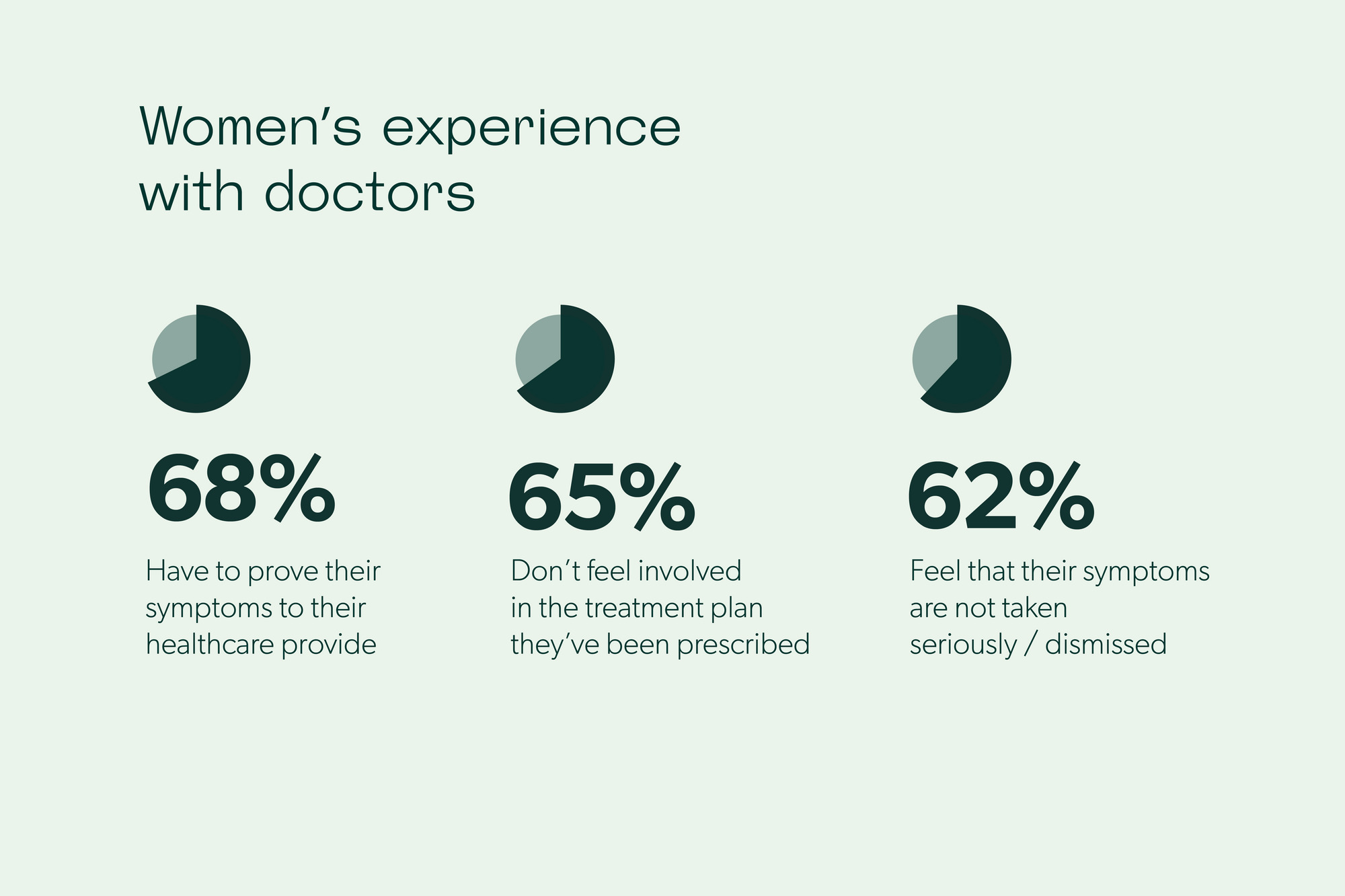
Men and women are not made the same, both physically and mentally speaking. For years, most medical practice has been done towards and based off of men. This being said, women's health care has only vaguely been researched, despite making up half of the world's population. Even though women are more likely to be caregivers than men, they continue to be gaslit and not taken seriously when it comes to their own healthcare due to insufficient research done in medical sciences. 


Why is this an issue?
With minimal research being done on women-based issues, we are unable to grasp a full understanding of the women individually. There is no reason women should be pushed aside, even in a male-dominated country. Oftentimes, women are told their issues are smaller than they actually are. In many women's experiences, any abdominal pain is written off as cramps and is not further looked into unless the patient advocates for themselves. Today, more women than ever before refuse to be medically evaluated because of the fear of being told there's nothing wrong with them and that everything they experience is all in their heads. 

Facts
- Women are dying at a younger age than they were in the past.
- More women are dying from pregnancy and childbirth complications today than before.
- Maternal mortality has spiked ever since changes to reproductive health care services, such as clinics offering birth control and abortions closing.
- Women are prescribed less pain medication than men.
- Women with chronic pain suffer longer than men.
- The average woman will wait 65 minutes when experiencing abdominal pain while the average man will only wait 49 minutes.

An Individual Story
Katy Seppi realized something was wrong when she first got her period. She noticed her periods were extremely heavy and painful, and she often missed school. She had been taken to the ER many times for this debilitation pain, only to be pushed off to the side and told it was only normal ovulation pain. Over the next 20 years of her life, she had seen tons of doctors about her menstrual cycle pain, only to be told the same thing each time. A few doctors even assumed that she had been sexually assaulted at a young age and had concluded that was the problem with her daily pains. It was only after she started fertility treatments at age 34 that she was finally diagnosed with endometriosis -- a disorder that causes the inside uterine tissue to grow on the outside of the uterus. "By the time I was diagnosed, my illness had gotten so bad that my ovary adhered to my uterus, both ovaries were full of blood-filled cysts, I was having back and hip issues and other pain daily." Katy Seppi says. Katy Seppi's experience is shared by thousands of women who have gone through something almost identical to Seppi's. (Gina Shaw June 08, 2018).

Why is this happening? 
It is suspected that many doctors and healthcare professionals tend to be biased when it comes to women's healthcare. Many assume that these women are being dramatic due to hormonal issues or are simply attention-seeking. In the medical sciences program, there is insufficient funding for women's health alone. "Nearly three-quarters of cases where a disease primarily affects one gender, the so-called “men's diseases” are overfunded, while the “women's diseases” are dramatically underfunded" (Chloe E. Bird February 11, 2022). For example, in the United States, cardiovascular disease is the number one killer of women, however, when testing new treatments in clinical trials, only one-third of the sample population is female.

Community's Response
Two women have experienced not being taken seriously when it comes to their health based on the fact that they are women.


Kellie Fowler is a 48-year-old single mother who had only recently found out she had endometriosis even though she has been having her menstrual cycle since age 12. 

"I always knew my periods were too heavy and painful, but every time I would go to the doctor to try and get some help the most I would get is painkillers prescribed. I only found out I had this condition after doing a biopsy because they thought I had ovarian cancer (thankfully I do not) not because they thought I had endometriosis." Fowler says. 


Melanie Beador is a 37-year-old woman who has been in and 
out of doctor's offices due to her reproductive issues since her high school years.

"Growing up I was overweight and had inconsistent periods and the doctors never thought my weight gain was hormonal. They always just told me to eat healthier, but no matter what I put into my body, I only seemed to gain weight and suffer horrible body image issues. Even when I was able to lose some weight by constricting myself, my stomach was still very enlarged. I was brushed aside when I brought up these issues to my doctors. I was finally listened to at age 30 and was diagnosed with PCOS. From there, everything made much more sense. It still shouldn't have taken as long as it did as  my body is still recovering from all the unhelpful medication I was put on." Beador states.


Why should I even care?
About 50% of the population makes up of women, they are our mothers, sisters, daughters, teachers, lawyers, doctors, providers, and so much more. 

How should we move forward?
As for healthcare professionals, they should be more aware of the patients they have coming in, most individuals would not show up to urgent care or the ER for no apparent reason. As for the patients and us as a community, we should advocate for our health. Most of us are paying hundreds or thousands of dollars in taxes and in insurance, health care is a necessity of the people, and we are the people. Stand up for yourself and for your loved ones that are unable to speak for themselves, and get the help and care you deserve. 

Why I chose this problem
Being a woman myself, I have experienced not being taken seriously. I was shunned away when I screamed to the doctors that I was in pain only to be told it was because I'm ovulating or other reasons. My endometriosis luckily only went undiagnosed for six years, which is lucky compared to so many other women. For six years to be considered short means there is a real problem in women's healthcare and it needs to be fixed now. 


Works Cited:

MU School of Medicine. (2019, March 22) Health Care Access. Retrieved from https://medicine.missouri.edu/centers-institutes-labs/health-ethics/faq/health-care-access

Bird, C. E. (2022, February 11). Underfunding of research on women's health issues is the biggest missed opportunity in health care. RAND Corporation. Retrieved from https://www.rand.org/blog/2022/02/underfunding-of-research-in-womens-health-issues-is.html 

Shaw, G. (2018, June 8). Why women struggle to get the right diagnosis. WebMD. Retrieved from https://www.webmd.com/women/news/20180607/why-women-are-getting-misdiagnosed 

Kiesel, L. (2017, October 9). Women and pain: Disparities in experience and treatment. Harvard Health. Retrieved from https://www.health.harvard.edu/blog/women-and-pain-disparities-in-experience-and-treatment-2017100912562  

Promoting Sustainable Art and Design

      In a society with rampant consumerism where we create so much waste it is rare to find others or businesses that care about the enviro...