Wednesday, April 20, 2022

Homelessness in Los Angeles is Increasing


Defining Homelessness

Due to multiple different circumstances, homelessness has been increasing in Los Angeles County. Many people have been placed in this situation not by choice but simply for hardships they experience throughout their life such as addiction, mental illness, unemployment, poverty, and lack of affordable housing. It can initiate with one major setback, causing other problems to take place, suppressing people in a situation from which they will never be able to recover. According to the Homeless Hub homelessness is "...an extreme form of poverty characterized by the instability of housing and the inadequacy of income, health care supports and social supports. This definition includes people who are absolutely homeless (those living on the streets, sometimes referred to as "rough sleepers"); shelter dwellers (people staying temporarily in emergency shelters or hostels); the "hidden homeless" (people staying temporarily with friends or family), and others who are described as under-housed or "at-risk" of homelessness."  


What is causing homelessness to rise? 

Researchers have recognized this issue has expedited in the 20th century because poverty has increased from the economy changing. The most recent Los Angeles homeless count concluded that 66,433 people are currently living on the streets, in shelters, and in vehicles. The homeless population has increased by 12.7% from 2019. Although more people are being placed in housing facilities the numbers continue to rise (Scott). The main reason homelessness is increasing is due to rent becoming unaffordable. Many people can barely afford to pay rent since they have to "...spend less than 30% of their income on housing costs. By that definition, none of the 1.09 million extremely low-income people in California, or those who earn less than 30% of the median income in their area, can afford to live anywhere in the state, according to a new study by the California Housing Partnership"(Matt Levin, Jackie Botts, and Manuela Tobias). These households are at high risk of becoming homeless because they find themselves spending about 46.7% of their income on rent when they should not be spending more than 30% of their income on rent. The average income in Los Angeles is $54k a year. In order to afford the average monthly rent individuals must have an income of $7,272 per month and make on average $41.96 an hour which is 2.8 times higher than the minimum wage in Los Angeles (LAFH). 

Mental illness and addiction are other frequent factors among people encountering homelessness. According to an investigation done by the Los Angeles Times, about two-thirds of the Los Angeles County's inhabitants living on the streets have a mental illness or substance abuse addiction. They found that "...20% of 37,000 people experiencing homelessness in Los Angeles had a clinically diagnosed serious mental illness within the last 12 years, whereas about a quarter of Los Angeles’ homeless population suffers from any mental illness" (Matt Levin, Jackie Botts, and Manuela Tobias). Hardships such as poverty, mental illness, and addiction are factors that cause people to have fallouts which can be hard to recover from. 

Other Factors

  • Poverty
  • Low wages
  • Unemployment
  • Lack of affordable housing
  • Substance Abuse
  • Mental health issues
  • LQBTQ kids neglected by their family
  • Domestic and sexual abuse
  • Kids who come out of foster care


Reducing Homelessness

  • Housing: Providing people with shelter and affordable housing is significant since permanent housing is the most successful way to end homelessness. This is the foundation in which an individual or family can receive services and support to maintain stability, start their recovery process, and accomplish their goals.
  • Create Career Paths: Presenting courses that educate people about managing finances and job opportunities. It is one of the most beneficial ways to support people as they recover from homelessness increasing their opportunities in obtaining a meaningful and sustainable job.
  • Build Partnerships: Preventing and ending homeless needs the contribution of the federal, state, and local jurisdictions to build a strong partnership. 
  • Prevent Homelessness: Strengthening our ability to prevent homelessness must focus on housing stability, housing needs, and risks of homelessness. 
  • Provide Health Care: Having the proper health care is essential in treating and managing chronic health and behavioral health conditions which have an impact on people's competence in staying sheltered and achieving their goals. Also, supporting them with substance abuse and mental health to help them get their life back. 

How can we help?
  • Make cards to promote nearby homeless shelters
  • Donate clothes and hygiene necessities
  • Fundraise
  • Volunteer to help the homeless
  • Advocate 
  • Seek out job opportunities 
  • Campain and promote charity events
  • Form a partnership with an organization to help people experiencing homelessness
Personal Connection
This issue is important to me because I have noticed more people living on the streets around my community. Every week there is another individual camping out on the street trying to find a safe place to sleep. There have been situations where the police have to remove some individuals because they are a danger to society. Some people experiencing homelessness in my community are not mentally stable and they tend to disturb the public. I am aware they are not fully aware of their actions; therefore, they should be placed in centers that will help them rehabilitate. This issue affects me because sometimes I feel unsafe in my community because they have tried entering my property and attempted to get in my vehicle. I chose this social issue because it is necessary to help people experiencing homelessness to help them restore their lives and become thriving members of our society. Reducing homelessness in our community will reduce street chaos and street waste, provide the community with better opportunities, reduce public costs, and contribute to a better piece of mind. 

Resources 

“Causes & Solutions.” LA Family Housing, https://lafh.org/causes-solutions.

Levin, Matt, et al. “California's homelessness crisis — and possible solutions — explained.” CalMatters, 31 December 2019, https://calmatters.org/explainers/californias-homelessness-crisis-explained/.

Scott, Anna. “Homelessness Rises In Los Angeles.” NPR, 12 June 2020, https://www.npr.org/2020/06/12/875888864/homelessness-in-los-angeles-county-rises-sharply.

“Solutions.” United States Interagency Council on Homelessness (USICH), https://www.usich.gov/solutions/.

“What is Homelessness?” The Homeless Hub, https://homelesshub.ca/resource/what-homelessness.


Health Care for the Elderly


Health Care for the Elderly

By: Kiara Limas 


In this video, is an elderly woman named, Mary McGrory, who is forced to live in her van because she cannot afford to live in a stable home. She has skin cancer and can't afford proper treatment because she can't afford health care. The title of this video is, "One in seven US seniors live in poverty," and it may not sound as jaw-dropping as we think, but the rates are growing as the years pass. 

What healthcare is out there? 

To start off there is Medicare. Medicare was made in 1965 under Title XVIII of the Social Security Act. It provides health insurance to people age 65 or older regardless of income or medical history according to the text, "Aging, the Individual, and Society” by Susan M. Hillier and Georgia M. Barrow. Although there is some sort of insurance out there for the elderly, the problems with Medicare is that it doesn't cover the important expenses such as dental care, over-the-counter drugs, eye examinations, hearing aids, etc. Although Medicare can cover some fees when visiting the hospital or having a doctor’s visit, there’s a particular list a person has to choose from. This is a problem because not all doctors accept this form of payment and may have to choose a doctor who may not specialize as good as a doctor who isn’t on the list. The only way those with Medicare can get a doctor who may not be on the particular list is if they pay additional fees. Individuals, especially those who are older shouldn’t be limited to receiving the care that they need. We don’t have a system that is flattening the curve of seniors not being able to afford medical care. 

Moving onto Medicaid, those with low-income are those who rely on this kind of care. In the text, “Aging, the Individual, and Society” by Susan M. Hillier and Georgia M. Barrow states that, “For those who qualify, Medicaid helps pay for a wide variety of hospital and other services. Medicaid pays for services Medicare does not cover…” (Hillier and Barrow 249) It is not fair how with certain pricing rising, some people can’t keep up with the expenses such as Mary McGrory. Mary relies on living in her van while getting food from local charity fundraisers to eat. There is no system to help the senior citizens get out of positions like that and be able to find an apartment while affording medical expenses. Mary lives with skin cancer and is not able to treat her condition because there is no support system that will give her the opportunity to be able to give her assistance to pay off the expenses. 

Statistics 


This chart shows people 55 and makeup for 56% of total health spending in 2019, despite making up only 30% of the population. Also, people under age 35 made up 45% of the population but were responsible for only 21% of spending.

Why is it important? 

People who are 65 and older are no longer able to work and have to rely on the fundings they provided for themselves over their years of working. Not everyone is granted access to a well-paying job, so some people's fundings aren't reliable to live for the next 20 years or so on their own. This issue affects me because before I found out about this information, I didn't care to think much of it. Growing up, I watched my both of grandmothers live a comfortable life and didn't take into consideration about how there are some that struggle day to day basis. I grew up in a comfortable city where I didn't see much suffering, up until I started working in Downtown Los Angeles where I was more exposed to seeing how many people have been let down. This became eye opening for me because I began to think about how I want to work hard and make sure I live with sufficient funds to be able to provide for myself. By the time I am older, I hope that there is a better system that will provide better care for the elders of this country, so that way there is no more suffering. 


References

Hillier, S. M., & Barrow, G. M. (2015). Aging, the Individual, and Society (10th ed.). Cengage Learning.

Al Jazeera English. (2012, October 2). One in seven US seniors live in poverty [Video]. YouTube. https://www.youtube.com/watch?v=vGqoxJCTTxg

Ortaliza, J., Ortaliza, J., McGough, M., Twitter, E. W., Claxton, G., & Twitter, K. A. (2021, November 12). How do health expenditures vary across the population? Peterson-KFF Health System Tracker. Retrieved April 18, 2022, from https://www.healthsystemtracker.org/chart-collection/health-expenditures-vary-across-population/ 


Gender Roles and Stereotypes

Gender Roles and Stereotypes

Why Toys Are More Gendered Than Ever — And What Parents Can Do About It :  NPR

Gender Roles and Stereotypes


What is gender stereotypes and roles

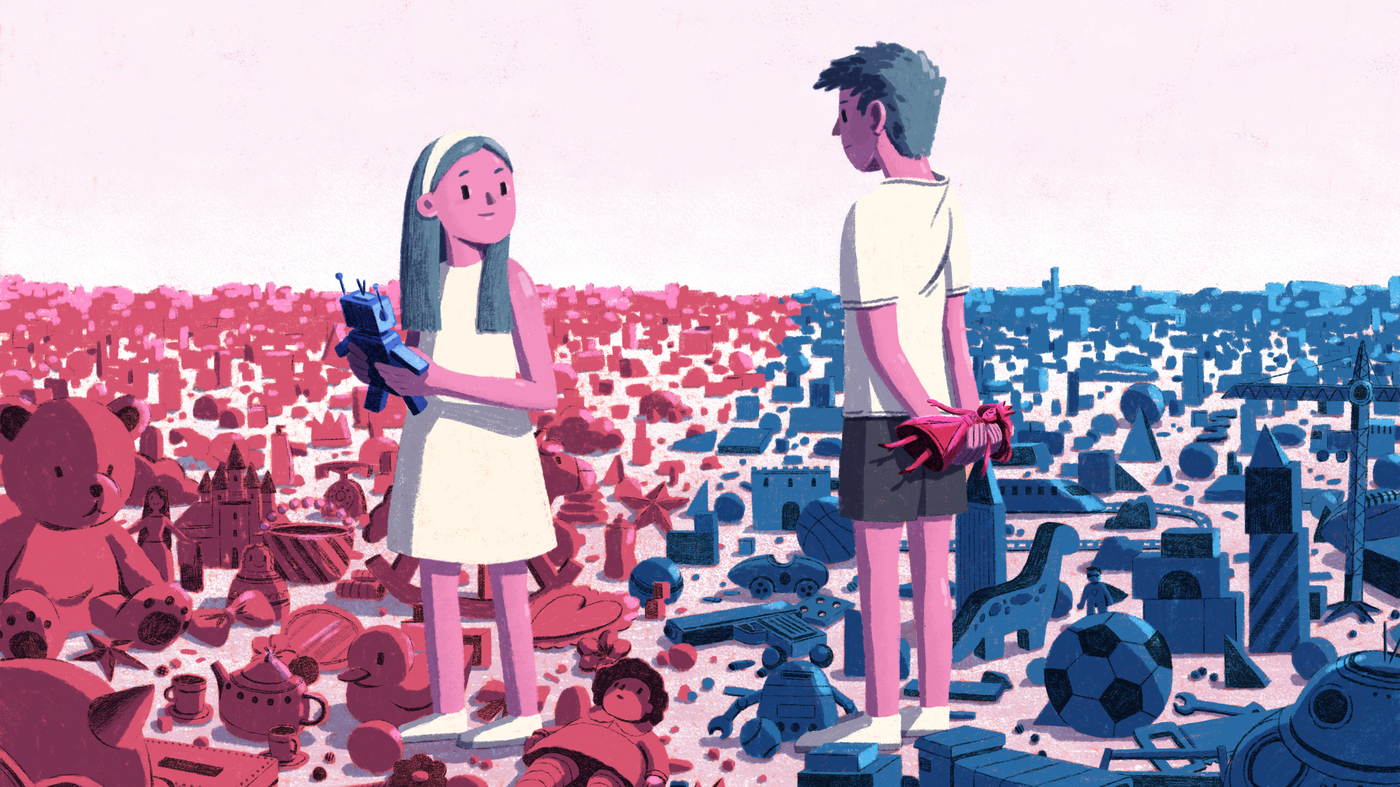
According to the United Nations Human Rights, in an article they wrote  called Gender Stereotyping it says "A gender stereotype is a generalized view or preconception about attributes or characteristics, or the roles that are or ought to be possessed by, or performed by, women and men." These "roles" of women don't work they stay at home with their kids as well as stay home and keep the house together. No education and no job just staying at home. For men on the other hand they are seen as the man of the house, the strong, fearless man who has an education, the one who is in charge of the finance and has a full time job. 

The stereotypes that girls need love the color pink and need to wear dresses, girls are always seen as the over emotional and are the nurturing ones. Men are seen as the ones who love the color blue and play's a sport and cars. 

    Where does Gender stereotypes come from?  

Gender stereotypes come from other individuals, from generations passed on to the younger generations. They're believes are taught to the younger generations and now the younger generations are seeing people even themselves in these old ways. Men don't clean, they can't be emotion, a women needs a man in her life to maintain her, women are in charge of cleaning. Women don't need to go to school. All these things are things that when I was younger I was told and I never believed that. In another article by Amy M. Blackstone from the University of Main, called Gender Roles and Society it says "Individuals sometimes base their perceptions about appropriate gender roles upon gender stereotypes. Gender stereotypes tend to include exaggerated or erroneous assertions about the nature of males and females." (page 337)  

How does this affect Women and Men 

Women:
Gender stereotypes affect women because it makes a women seen less of and don't have as much opportunities like men do. They are seen little too many people and women have to constantly be proving herself to society. Many women struggle to go into a high paying job because they are competing with a male and the company will most likely give the male the spot instead of her because they don't think women are capable to do the tasks that the job would offer. In a journal by Sage Journals called Gender Stereotypes and Their Impact on Women's Career Progression from a Managerial Perspective says "Gender specific behaviour in the workplace. Perceptions of different work preferences of women and men and justifications of women’s behaviour were identified as causes of stereotypes. Privileges offered to women, such as the ascription of less risky projects or the provision of the nearest parking spaces can cause stereotypes. For example, stereotyping can be caused by the approach taken by a company to support the career advancement of women, which might in fact result in women withdrawing from the paths leading to career success." Women sometimes just end up giving up because no matter how hard they work there is always something blocking them to keep rising.   

Men:

Generally men aren't suppose to show emotions and because of that when men do show their emotions they are seen as weak. Many times men are put into this expectation that they need to be hard working and need to get educated and get these high paying jobs. Men are put into these hard pressures that they need to get these great paying jobs and need to have a good job to provide for their families and if they don't they are seen as lazy men or that they have failed at life. When in reality men should not have that type of mindsets and women shouldn't see men that way. They should be allowed to show emotions and get the job they wish to get and spend time with their kids and just have the right to live their life how they wish to without there being this gender roles and stereotypes.

How can we as society Prevent gender stereotypes and roles

One of the best ways to prevent gender stereotypes and roles is to educate ourselves and others. Start educating young students at a certain age where they understand more. Creating classes that will cover this subject what be a great way to prevent this and the reason to that is because people aren't informed or they just agree with their elders. In an article by IBERDROLA it says "The seed of stereotypes is sown in education, and education is where the solution lies. Therefore, as UNESCO states in its Global Education Monitoring Report, the support of governments is crucial. For example, curricula, textbooks and teacher training program`mes should be periodically reviewed to ensure that gender stereotypes are not perpetuated and apprenticeship programmes, tutorials, networks or scholarships should be considered to promote and encourage the incorporation of women into STEM fields. Teaching about gender and stereotypes at a young age can help people understand and not do it. Getting informed and really seeing how the world is changing and how we can change with it. Decades ago women weren't allowed to work now we have business women's and even women who work at a 8-5 job who are still mothers and are working and providing for their families. It's the same thing for men, men can work less and spend time with their family or hey not even work at all because the women is the provider and there shouldn't be an issue with that. 

Why did I choose Gender stereotypes and roles

ASA bans first adverts for harmful gender stereotyping

The reason why I choose to do this blog on gender stereotypes is because it's an issue that affects me as well as thousands of other people across the U.S. Not only are women affected by these gender roles but men as well. I think our society should me more open to ideas of any one can be who they want and how women don't need to be seen just as housewives and men don't just need to seen as the man of the house or the one who works full time and pays the bills. When I think of when I was younger the way stereo types were is still the same until this day, there has been no big change. I think society has shaped the way many people view people and so when I hear of you don't need to go to school you will just stay at home and take care of the home and kids. I think to myself is that how everyone see's me or a women. It is time to talk about the issue and that is the gender stereotypes. 

References 

OHCHR | Gender Stereotyping. https://www.ohchr.org/en/women/gender-stereotyping.

Corporativa, Iberdrola. “Ending Stereotypes Begins in the Classroom.” Iberdrola, https://www.iberdrola.com/social-commitment/gender-stereotypes-women#main-content.

Blackstone, Amy M. Gender Roles and Society - Digitalcommons@Umaine. https://digitalcommons.library.umaine.edu/cgi/viewcontent.cgi?article=1000&context=soc_facpub.

Gender Stereotypes and Their Impact on ... - Sage Journals. https://journals.sagepub.com/doi/full/10.1177/2277975220975513.


HIV in LGBTQ+ community


HIV impacts the LGBTQ+ community compared to others

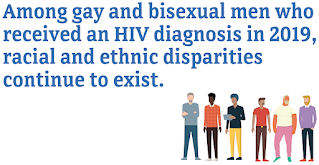
    According to the CDC In the United States, there are 1.2 million people living with HIV, and about 40,000 persons were diagnosed with HIV in 2015. Between 2005 and 2014, the yearly number of new diagnoses decreased by 19%, however, improvement has been inconsistent. For example, gay and bisexual males made up around 2% of the US total population in 2019, yet they accounted for 69% of all HIV-positive people in the country. If present rates of HIV diagnosis continue, one out of every six homosexual and bisexual males will be diagnosed with the virus throughout their lifetime. The percentages of Latino and Black males who are gay or bisexual are 1 in 4 and 1 in 2, respectively.


Hiv treatment is underfunded.

    Our nation's public health system lacks the resources it needs to respond effectively to the HIV and AIDS epidemic after decades of insufficient financing. This system has indeed been terrible for LGBTQ people because the little financing for HIV prevention, treatment, and care has not been focused on or financed in the areas most affected by the virus. Programs like "The Ryan White care program" for example have indeed been terrible for LGBTQ people because the little financing for HIV prevention, treatment, and care has not been focused on or financed in the areas most affected by the virus. Policy decisions based on ideology rather than evidence, such as the funding of more than $1 billion to unsuccessful abstinence-only sex education programs or the implementation of outmoded HIV criminalization policies, impeded federal and state initiatives. People living with HIV can be convicted and imprisoned in more than 30 jurisdictions just because a partner accuses them of concealing their HIV status. There's no evidence that these laws work, and they harm public health by creating shame and discouraging individuals from having HIV diagnosed or treated.

Overview

In the United States and across the world, HIV is a severe public health crisis. Despite the fact that huge scientific discoveries have rendered it simpler than ever before to prevent or treat HIV, there is still no vaccine or cure, and thousands of individuals develop HIV each year. Inadequate financing for public health initiatives, ideological hostility to good judgment preventative strategies, and cultural hurdles such as shame and prejudice have made it particularly difficult to stem the flow of the pandemic.

References:

“HIV and All Gay and Bisexual Men.” Centers for Disease Control and Prevention, Centers for Disease Control and Prevention, 16 Sept. 2021, https://www.cdc.gov/hiv/group/msm/index.html.

“HIV and the LGBTQ Community.” Human Rights Campaign, https://www.hrc.org/resources/hrc-issue-brief-hiv-aids-and-the-lgbt-community.


An End to Animal Cruelty

    The killing of innocent animals is certainly a vicious act but not an uncommon one. According to an article on animal slaughtering, "Killing frequencies are indeed overwhelming, leading to the slaughter of ten billion animals per year in the U.S. alone, with hundreds to thousands of kills per hour in individual plants" (Heidemann et al., 2020). Some may say that the slaughtering of animals is necessary because, well, we need to eat but there are many alternatives available today and so, there is no reason for us to be killing that insane amount of animals each year! Also, there are instances when individuals kill animals without reason. For instance, in the article "Animal serial killing: The first criminal conviction for animal cruelty in Brazil", the details behind a horrific act of violence made against several animals in Sao Paulo, Brazil were made known to the public. According to the article, the offender was a woman that claimed to be an animal rescuer and was often seen taking in several stray cats and dogs over the years. When a private detective began investigating her, they realized that all the animals that were brought into her home were never seen again. This realization prompted the detective to look through the women's property and it was during this search that the detective, unfortunately, found 37 dead animals in trash bags. In the report, it was stated that "all the animals were killed in the same way and by the same method, which cannot be natural—the animals were intentionally killed. They were submitted to single or multiple cardiac punctures with the injection of ketamine" (Salvagni et al., 2016).  It was not revealed the motive behind this gruesome act of violence but no matter the reason the offender did not go unpunished and there were serious legal ramifications for what she did. It was reported that she was "sentenced to 12 years, 6 months and 14 days of prison" (Salvagni et al., 2016). Although one would hope that this sort of vicious act would never happen again, it is likely that it may but I believe we have taken a step in the right direction by increasing the punishment for these types of crimes. 

    Furthermore, animal cruelty is a social issue that I have always been deeply concerned about. It was actually one of the reasons I decided to convert to vegetarianism at the age of 13. I had seen a video that demonstrated the cruel ways some people treat farm animals and I remember feeling so heartbroken after that I vowed to never eat an animal again. It has been 7 years now and I do not ever see myself consuming animals ever again. Anyway, something that I always found difficult to comprehend was why many of us humans think the lives of animals are incomparable to ours and are not in any way valuable. Animals could literally turn out to be our best friends. And I do not just mean cats and dogs because I think ALL animals, no matter how funny-looking, are worth caring for. So, it is because I believe that the lives of animals are just as important as ours that I chose to discuss this social issue.


References:

https://doi-org.mimas.calstatela.edu/10.1016/j.forsciint.2016.08.033

https://doi.org/10.3389/fpsyg.2020.01824


Tuesday, April 19, 2022

The Gas Price Rise Problem

 Gas Prices in General

Too high, is what you would say to the recent increase in pricing for gasoline all across the globe. Though not everyone has as bad of pricing for their gasoline as others does not mean that they are not suffering under this kind of problem as well. But from the look at the line graph, it shows each part of the United States having a bigger increase of pricing at March 2022, which would have meant something sudden had a drastic effect on the pricing to make it increase by almost two dollars. This increase would make it harder to live by for certain people, and from the looks of it, especially for the people of California with that kind of pricing. 

In this picture it shows what is being paid for when getting a gallon of gas, with 14% of it going to taxes, 11-17% on distribution & marketing, 14-16% on refining and 53-61% on the actual gas/crude oil itself. A part of that increase is “of taxes as well as regulatory programs aimed at reducing greenhouse gas emissions”. With the state taxes on gasoline being about up to 40%, that would definitely change the picture above by a lot, since the 14% would then be changed to up to 40%.

Why Focus on LA?


In Los Angeles it is usually known to be an expensive city to live in to begin with, then you include the recent gasoline price increases and it only makes it much more expensive. Looking at the map of California gas prices you see that the red is where the prices are up high, while the blue is when it is low. But for Los Angeles it is almost or is already up to 6 dollars, which puts it at the red for the price changes. Explaining why Los Angeles is the one to focus on for both its high price of living in and of being one of the few cities in California to have the higher increases than others.

This picture of current gas prices in some parts of Los Angeles is an example of one of the many gas stations that got hit with this increase. These kinds of prices are a disaster to many and would make it much harder to travel around anywhere without thinking about having to pay so much later on.

Causes For These Prices

After having a look around, it seems there are two big factors to the high rise in pricing for gas prices for all. One of them being of COVID-19 for disrupting the many supply chains that also include oil. The next big factor being the war going on over in Ukraine, more specifically that Russia raised the prices for oil by 58%, and for gas up to 28%. The reason for them raising it to that much is because of Russia being one of the top three of producing oil, which makes them able to raise it when they want. With that increase they can buy much more supplies for themselves.


References


NBC10 Boston. (2022, March 15). Q&A: Why are gas prices so high? what can be done? NBC Boston. March 15, 2022. https://www.nbcboston.com/news/local/qa-why-are-gas-prices-so-high-what-can-be-done/2669904/ 


California average gas prices. AAA Gas Prices. n.d . https://gasprices.aaa.com/?state=CA 


Karlamangla, S., & Woo, E. Why California gas prices are especially high. The New York Times. March 9, 2022. https://www.nytimes.com/2022/03/09/us/california-high-gas-prices.html 


Patton, M. The real reason behind surging gas prices. Forbes. April 14, 2022. https://www.forbes.com/sites/mikepatton/2022/03/09/the-real-reason-behind-surging-gas-prices/?sh=6c8bc22f26de 


Racially driven police brutality.


Police Violence.


 According to Amnesty,org, "The term 'police brutality' is sometimes used to refer to various human rights violations by police. This might include beatings, racial abuse, unlawful killings, torture, or indiscriminate use of riot control agents at protests." 

Most of us already knew that. But, what a lot of people don't realize, is just how disproportionate the number of cases, of police violence towards minorities, or people of color is. According to the L.A. Times, since 2000, police have killed 964 people. Out of those 964, 776 were minorities, or people of color. The numbers look even scarier when you compare the population percentage in L.A County to the percentage of police killings based on race,


Latino people being the biggest population in L.A. County, also have the highest percentage of deaths, but Black people only make up about 8% of L.A County's population, but they make up 24% of deaths by the police. This shows a major problem. Police in L.A County aren't only guilty of high numbers of police violence, but racially motivated, or targeted violence. 


On a national scale, Black people are 2.9 times more likel to be killed by police, according to mappingpolicevilolence.org.That number is only second to the number of Pacific Islanders killed by police.

Being from LA. County, this is a problem that's all around me. Something needs to be done. A good place to start would be, to hold officers accountable for their actions, and even words. Also remove arrest, and ticket quotas.Quotas make it more likely for cops to target minorities. I don't believe in defunding the police. But, I do. think instead of militarizing the police, that funding should go into more racial, and diversity training. As well as stricter background checks. If parents looking to adopt a child have to go through incredible scrutiny, why don't police officers, who are entasked in protecting all of us. Lastly I find it a good idea for a social worker to accompany a police officers. Maybe even an internal compliance officer.

This has more recently come to light in the media due to cell phone footage, and body cam footage. But it has been going on since the beginning of this country. Some people think it began and ended during the Civil Rights movement, but it's just as prevalent now, and I can't imagine how many times it happened before cell phones and body cams.


I grew up in South Gate, a predominantly Black, and Hispanic neighborhood. I remember being a kid and seeing the video of Rodney King being beaten on the street on the news.I couldn't understand why the police, whom I was taught at school to look to for safety, were hurting someone. I remember watching the riots that followed on TV, and seeing the glow of fire in the not so distant skyline. I asked my dad why this was all happening, and he couldn't answer me. I now realize how hard to explain all of this would have been. That all stuck with me. Later as a teenager, I moved with my family to Azusa. Another mainly Hispanic, and Black neighborhood, and I began to see how the police treated my friends and I. We were all minorities. At first I thought that's just how the police was with everyone, until my Caucasian friend, and I both were picked up by cops for graffiti. Two Caucasian cops. My friends parents were called, and he was picked up and got to go home. I on the other hand was slammed on the hood of the car, videotaped on a camcorder, and arrested. After that I paid attention to how those around me were being treated by police. Later in life two of my friends became police officers. One Latino at the LAPD, and the other Caucasian at the Huntington Beach PD. Both quit after about a year. The things they saw, and stories they told me about. They couldn't handle the way their own "brothers in blue" were treating people, including the homeless. I lost faith in the police, and believe in protecting one another as a community. Something needs to change. That is why I'm majoring in Social Work, to try and make a difference. That's why this is important to me.


“Police Violence.” Amnesty International, 1 June 2021, https://www.amnesty.org/en/what-we-do/police-brutality/.

“Mapping Police Violence.” Mapping Police Violence, https://mappingpoliceviolence.org/.

“L.A. Police Killings: Tracking Homicides in Los Angeles County since 2000.” Los Angeles Times, Los Angeles Times, 5 Apr. 2022, https://www.latimes.com/projects/los-angeles-police-killings-database/.

Promoting Sustainable Art and Design

      In a society with rampant consumerism where we create so much waste it is rare to find others or businesses that care about the enviro...